
BLUF: After years of chasing an upstairs cooling problem, the root cause turned out to be a leaking evaporator coil. The interesting part wasn’t the repair—it was realizing that troubleshooting an HVAC system isn’t much different from troubleshooting a server, a network, or a piece of software. The tools are different, but the process is remarkably similar.
Related Reading: Hosting WordPress on My Synology NAS
🔍 The Problem
For several years, the upstairs portion of my home never seemed quite right.
Some days it cooled well. Other days it struggled. A few years ago an evaporator coil was replaced, and for a while the system performed much better. Then the symptoms slowly started returning.
If you’ve ever worked in IT, this probably sounds familiar.
The worst problems are rarely complete failures. They’re the intermittent ones. The issues that appear, disappear, and leave you wondering if you imagined them.
Over time, multiple technicians inspected the system. Different theories emerged. Refrigerant was mentioned. Airflow was discussed. Insulation was questioned. Thermostat settings were reviewed.
Nothing pointed clearly to a single cause.
💻 The IT Approach
After more than twenty-five years working in technology, I couldn’t help approaching the problem the same way I would approach a server outage or network issue.
I wasn’t troubleshooting an air conditioner.
I was troubleshooting a system.
Instead of immediately replacing equipment, I started collecting observations:
- Temperature readings
- Humidity levels
- Thermostat schedules
- Sensor placement
- Airflow patterns
- Upstairs versus downstairs performance
One evening I noticed something interesting.
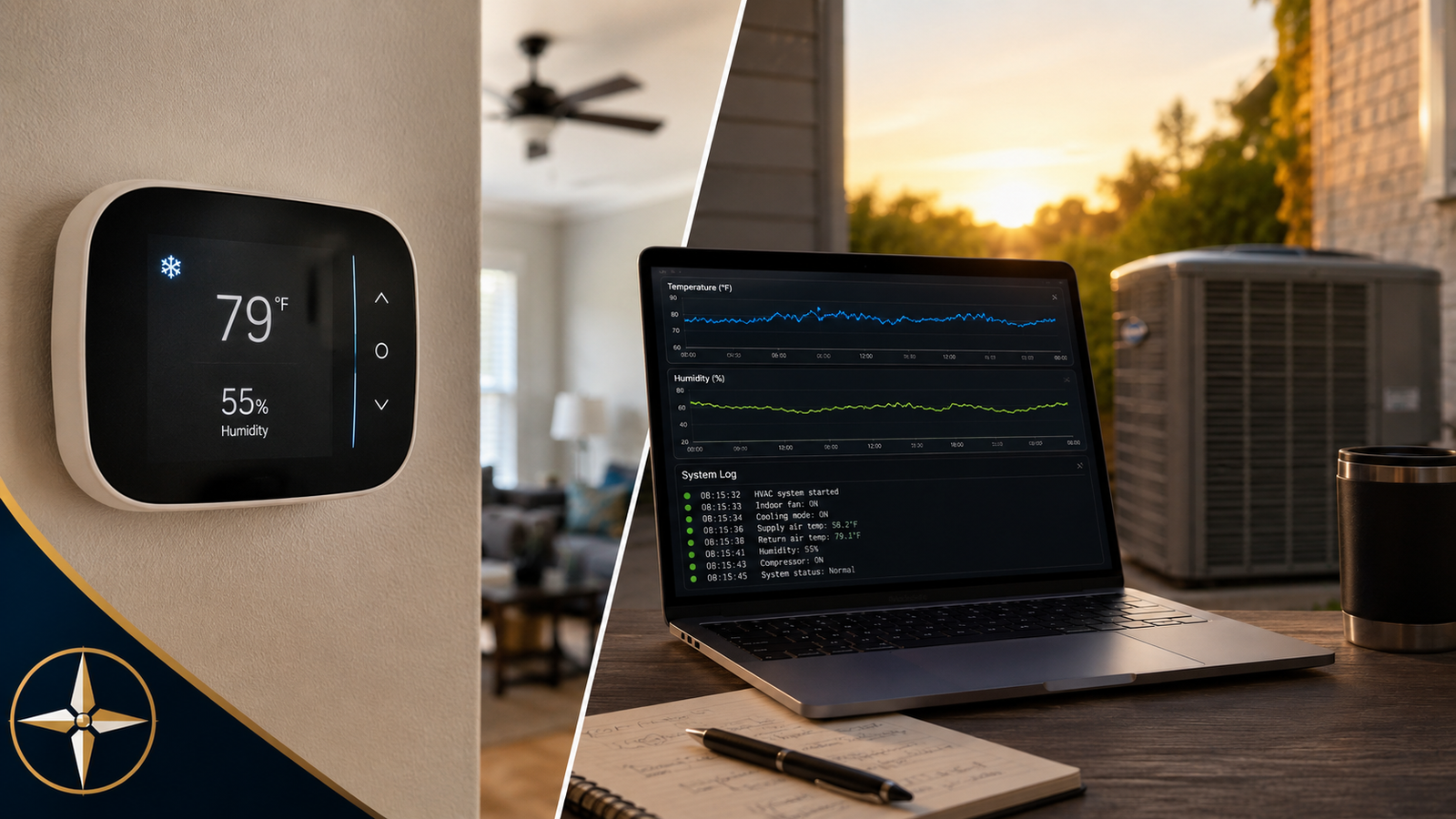
The upstairs temperature remained around 79°F, but humidity dropped from approximately 59% to 55% after running fans and improving airflow between floors.
The temperature never changed.
The comfort level did.
That was an important clue.
🌬️ What the Humidity Taught Me
Fans don’t remove moisture from the air.
They don’t function as dehumidifiers.
What they can do is improve circulation and mix conditioned air throughout the home.
By pushing cooler air upstairs and improving overall airflow, humidity dropped several percentage points and the space immediately felt less sticky.
That became my temporary mitigation strategy.
In IT terms, I hadn’t fixed the root cause.
I had implemented a workaround while continuing the investigation.
Sometimes that’s exactly what good troubleshooting looks like.
📊 The Data Changed the Conversation
One thing I learned during this process is that observations carry more weight when they’re backed by data.
Instead of saying, “The upstairs feels uncomfortable,” I could point to temperature readings, humidity levels, runtime behavior, and airflow patterns.
That shifted the conversation from opinions to evidence.
In IT, logs often tell the story. In HVAC, temperature and humidity measurements can do the same thing.
📋 The Incident Response Process
Looking back, the entire process followed a surprisingly familiar pattern.
- User Complaint: Upstairs is hot.
- Tier 1 Support: Verify thermostat settings and schedules.
- Tier 2 Support: Verify sensors, airflow, and system behavior.
- Tier 3 Support: Collect data, compare trends, and review historical repairs.
- Vendor Escalation: HVAC technician performs diagnostic testing.
- Root Cause: Leaking evaporator coil.
- Resolution: Replace failed component and improve airflow balancing.
That’s essentially an IT incident report.
The hardware just happened to be sitting in an attic instead of a server rack.
🔧 The Recommendation
What impressed me most about the final recommendation was what wasn’t recommended…