
BLUF
The PlungIT leak problem was not solved by one magical fitting. I measured ports, tested valves and caps, changed connections, watched water pressure, and documented drips. My practical result was that the inflatable system behaved best with water continuously circulating. That is not a universal claim that a pump repairs leaks; it is the firsthand lesson from my particular combination of tub, fittings, hoses, caps, pump, and chiller.
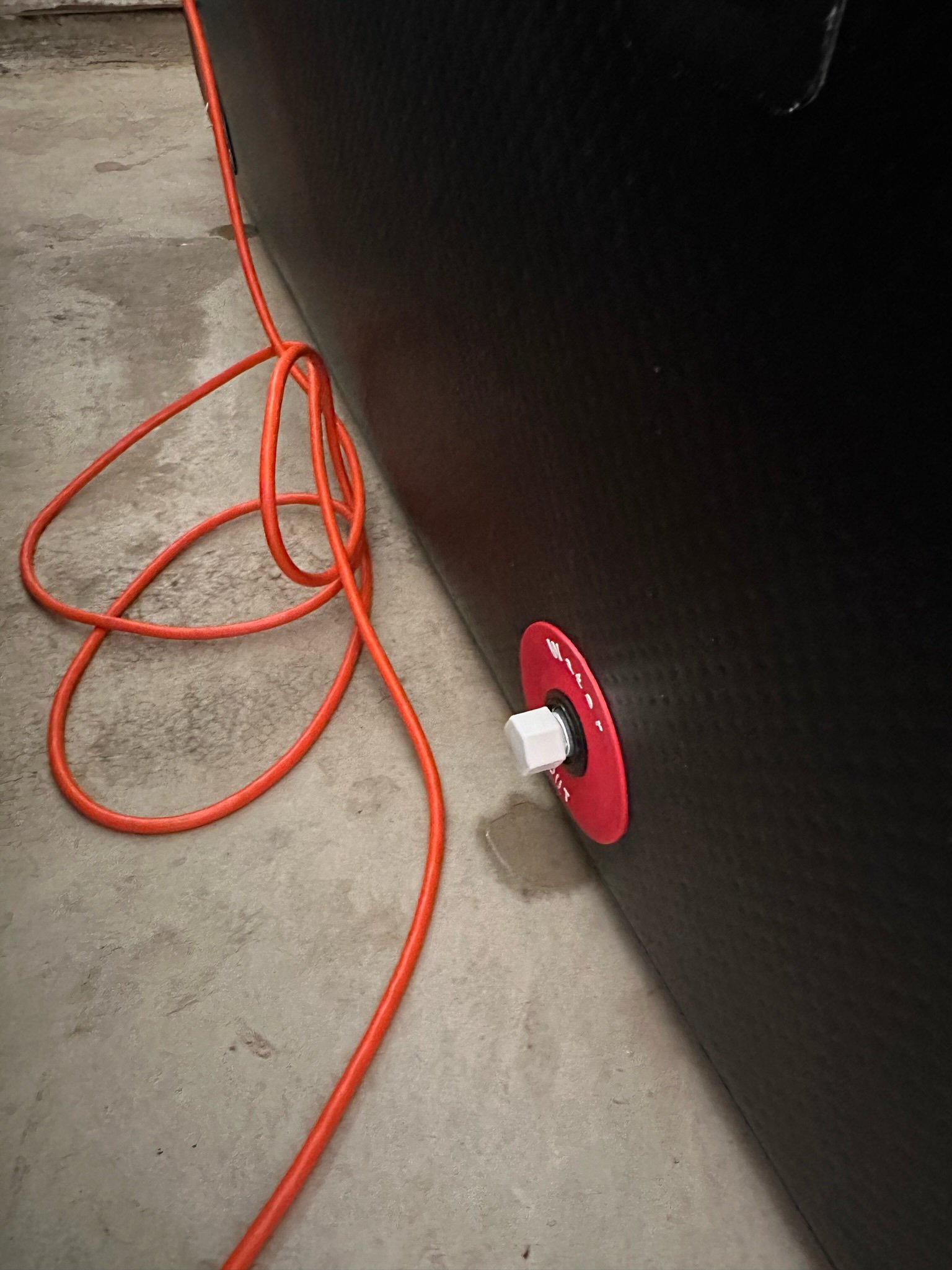
Why I Took So Many Pictures of Drips
The archive contains an unreasonable-looking number of close-ups of damp connections. They exist because the leak changed as I tested the system.
An inflatable plunge is not simply a container with two holes. The inlet and outlet must connect a flexible wall to rigid or semi-rigid plumbing while holding water pressure. Caps, gaskets, threads, valves, hose diameter, pump output, and the way the tub flexes all matter.
When something dripped, I photographed it so I could compare configurations and communicate with suppliers. Those imperfect images now preserve more engineering history than the polished product photographs.
Static Water and Moving Water Behaved Differently
The pressure created by water in a filled tub does not disappear when the pump stops. In my testing, the connections appeared more prone to leakage when the system was sitting under static pressure. Once I kept the water moving through the loop, the setup performed well.
That observation shaped how I thought about the final product: circulation was not optional. It supported cooling, helped keep temperature more even, and was part of the operating condition under which my fittings worked best.
I would describe this more carefully today. Continuous circulation cannot fix a torn gasket, cracked fitting, cross-threaded cap, damaged weld, or incorrectly sized connector. A leak can also result from excessive pressure or overtightening. What worked for my system should be treated as troubleshooting evidence, not a law of plumbing.
The Whole Loop Had to Agree
The finished loop involved:
- Water leaving the tub through an outlet fitting.
- A pump moving it through insulated hose.
- The chiller removing heat.
- Water returning through the second tub fitting.
A mismatch anywhere in that path affected everything else. A reducer could restrict flow. A loose thread could admit air or release water. A pump could be nominally powerful but deliver less flow after hose resistance. A cap could seal while dry yet behave differently once the flexible tub was full.
The chiller manufacturer rated the quarter-horsepower unit for a maximum of 10 psi and specified a flow range of 396–925 GPH. Those limits reinforced the need to treat pump selection and plumbing as part of the chiller installation—not separate buying decisions.
Small Handling Details Also Mattered
The historical customer warnings advised users not to overtighten the caps, move the tub while it was full, overinflate it, leave it excessively exposed to sunlight, or allow sharp objects near the PVC.
Those instructions sound ordinary, but an inflatable full of water carries a large load. For a 72–75 gallon one-person tub, the water alone could weigh roughly 600 pounds. Moving or twisting the tub while filled could place forces on seams and fittings that were never present while empty.
What I Would Change in Another Version
If I built another production run, I would standardize the connection stack and document it piece by piece: bulkhead or valve, gasket orientation, thread type, adapter, hose, clamp, and maximum operating condition. I would pressure-test each tub before delivery and record whether the loop held both while circulating and while stopped.
I would also give buyers a troubleshooting sequence rather than a vague instruction to “tighten the fitting.” Overtightening can create a new failure. The correct question is where the water originates and under what operating condition it appears.
Why This Failure Was Valuable
The leaks were frustrating, but they exposed the difference between sourcing a tub and delivering a system.
A factory can manufacture an inflatable vessel. A chiller company can specify its equipment. A pump can carry a flow rating. The product builder is responsible for making those parts work together in ordinary use.
That integration—and the documentation produced while it failed—is where much of the real PlungIT work happened.
Part of the PlungIT archive. Begin with the pillar story. Previous: matching the chiller and pump. Next: what direct sourcing from China actually cost at small volume.