
BLUF: Before I sourced inflatable tubs from China or sold a single PlungIT system, my wife and I tested cold-water immersion in our own bathtub. We began in January 2023 with water around 60°F while we were both doing CrossFit. It was an improvised setup, but it answered the first question: would we actually use it? The answer was yes. That household experiment gave me enough confidence to keep going, and over the next few months it evolved into a portable cold-plunge product.
This is a personal history, not medical advice. I hoped cold plunging might help with workout recovery and migraines. I also wondered whether the experience might affect my general stress-related symptoms. My migraines eventually disappeared, but I cannot say cold immersion caused that outcome, and I am not claiming that it treats or cures migraines.
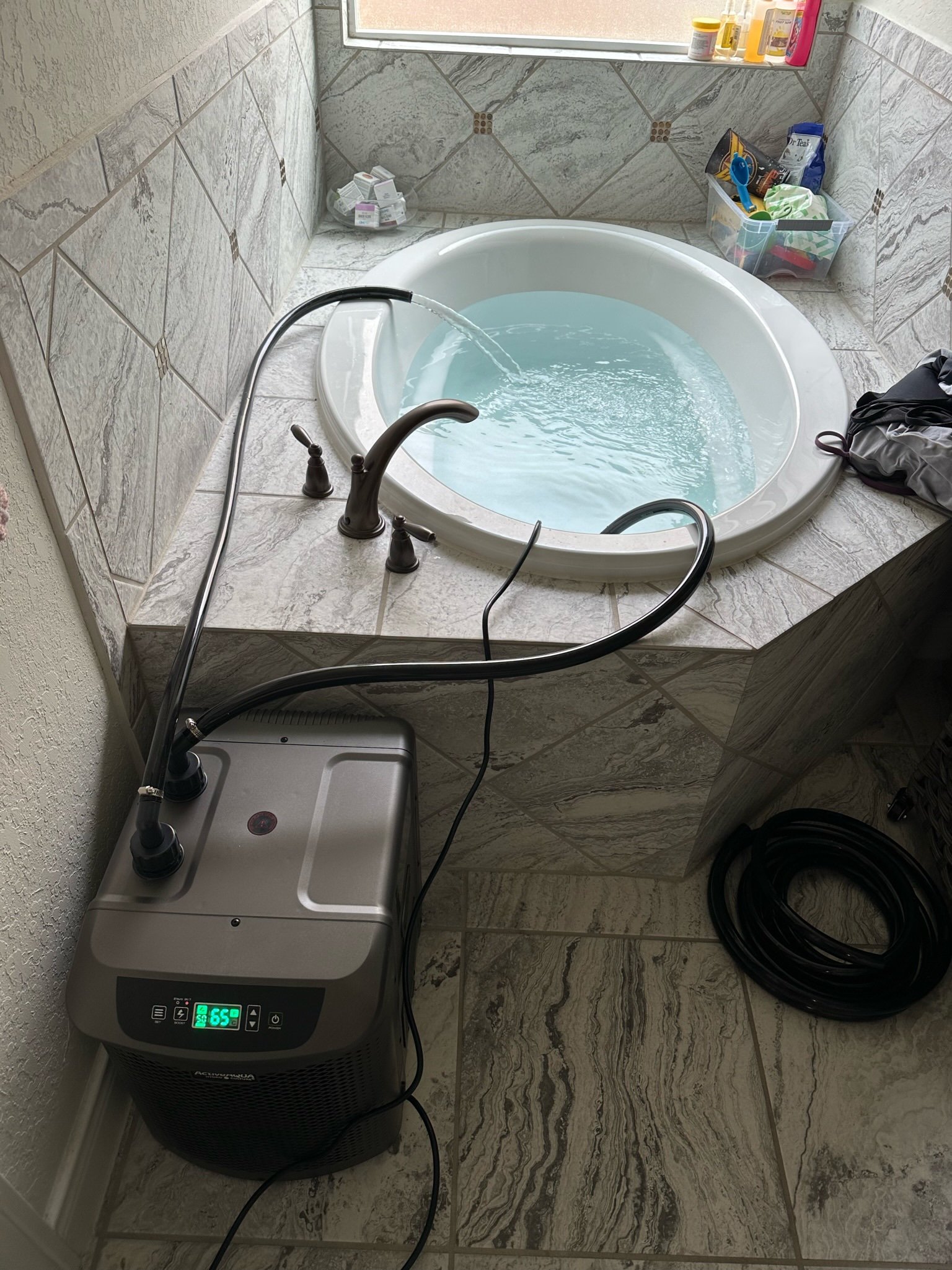
The Project Started Before the Product Arrived
In early 2023, cold plunging was becoming popular, but many complete systems carried prices around $3,000. My instinct was that the basic engineering—a tub, water chiller, circulation pump, hoses, and fittings—should be possible for much less.
I had already started looking into inflatable tubs from China, but international sourcing takes time. Rather than wait for the first shipment before learning anything, I connected a chiller and pump to our household bathtub.
My wife and I were both doing CrossFit at the time. We initially used water around 60°F and treated the setup as a practical experiment after workouts. We felt that it helped our recovery, which gave us a reason to continue. That is how it felt to us; we did not clinically measure inflammation or conduct a controlled test.
The first lesson was simple but important: I did not need a purpose-built tub to learn whether cold immersion belonged in our routine. The bathtub let me test the experience before I had a product.
What the Archive Can—and Cannot—Date
My recollection is that the bathtub testing began in January 2023 while the imported tubs were still in transit. The surviving media does not capture that very first day.
The earliest bathtub-system photograph in my archive is dated February 19, 2023. It shows a chiller circulating water through the tub, with its display reading 65°F. A more complete sequence from March 17 and 18 shows the pump in the water, insulated circulation hoses, the chiller beside the tub, and even the two power cords labeled “CHILLER” and “PUMP.”
Those timestamps matter to me. They are not decorative metadata; they are evidence of how the project developed. Where my memory supplies the beginning and the files document later iterations, I want this record to preserve both without pretending they are the same thing.
The Bathtub Became a Test Bench
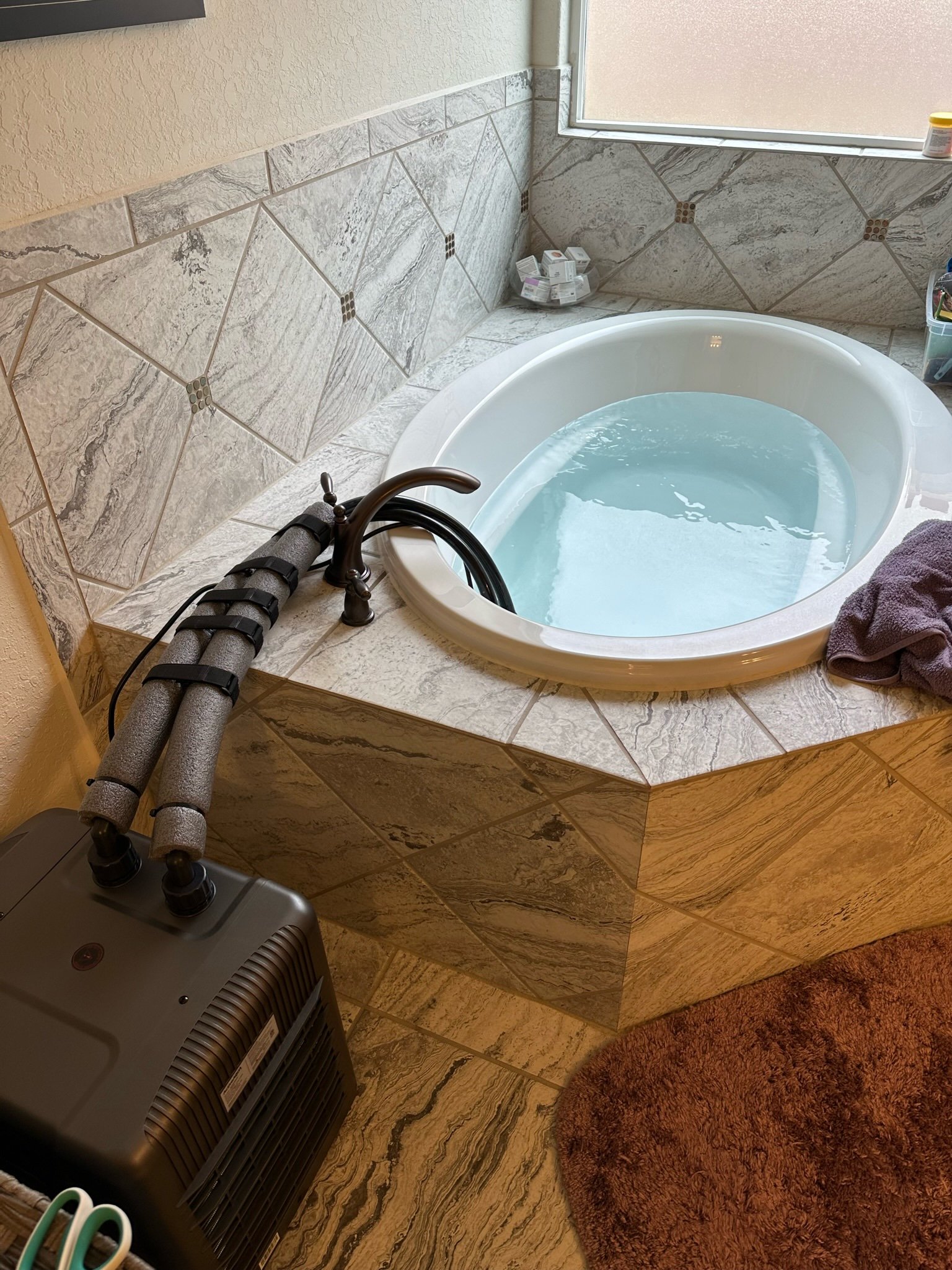
Looking back, the setup was crude, but it contained nearly every major part of the later product:
- a vessel holding the water;
- a chiller removing heat;
- a pump keeping the water moving;
- insulated hoses carrying water to and from the chiller; and
- electrical power for both pieces of equipment.
At first, I was simply trying to make cold water. Very quickly, I started thinking like a product builder. How quickly would the water cool? How much flow did the system need? How should the hoses be insulated? Where would the inlet and outlet belong on an inflatable tub? Could the whole system be portable and still feel finished?
The bathtub was not the PlungIT product, but it was the first working model of the system behind it.
It also exposed practical limitations. A household tub has no dedicated circulation ports. A submersible pump and loose hoses may be acceptable for a personal experiment, but not for a product intended for customers. The real tub would need purpose-built fittings, reliable circulation, a fitted cover, and a cleaner way to connect everything.
From Personal Experiment to Product Idea
My surviving written plunge log begins on February 20, 2023. I started with short sessions and recorded the time, water temperature, frequency, and my physical reactions. The earliest sessions caused serious headaches. Those headaches later stopped, but the experience taught me that cold immersion was a real physiological stressor—not merely a fashionable wellness accessory.
I will publish the complete historical log separately because it deserves context of its own. It should not be copied as a recommended protocol. Cold water can trigger an abrupt cold-shock response, and individual health circumstances matter.
Meanwhile, the physical product was beginning to take shape. By March, the archive shifts from bathroom experiments to measurements, valves, ports, fittings, hoses, pumps, temperature readings, and inflatable prototypes. The questions were no longer only personal. I was working out what another person would need to receive a usable system instead of a tub and a pile of unresolved parts.
That distinction became central to PlungIT. The product was never supposed to be just an inflatable container. The meaningful offering was a matched system: tub, lid, chiller, pump, insulated hoses, fittings, and the knowledge needed to keep water moving through it.
What I Know Now
The bathtub experiment did exactly what an early prototype should do: it answered enough questions to justify the next step, while revealing many more questions that I had not considered.
It showed that my wife and I would actually use cold water after workouts. It gave me firsthand experience before I tried to sell anything. It also showed that the engineering challenge was not simply buying a chiller. Flow, insulation, fittings, water volume, electrical safety, leakage, and everyday usability all mattered.
Most importantly, it preserved the true origin of the project. PlungIT did not begin as a polished brand or an imported product. It began with curiosity, a chiller on the bathroom floor, hoses draped into a bathtub, and a decision to see whether the idea could work.
The answer was yes—but making it work as a product would be a much longer story.
This post is part of the PlungIT project archive. Read the pillar story: I Tried to Build a More Affordable Cold Plunge—Here’s What Happened. Next in the series: my complete 2023 cold-plunge diary.