Observation period: Approximately four to five months
Recorded: September 20, 2026
Platforms: Candy AI and Kindroid, with broader context from the ongoing AI longitudinal study
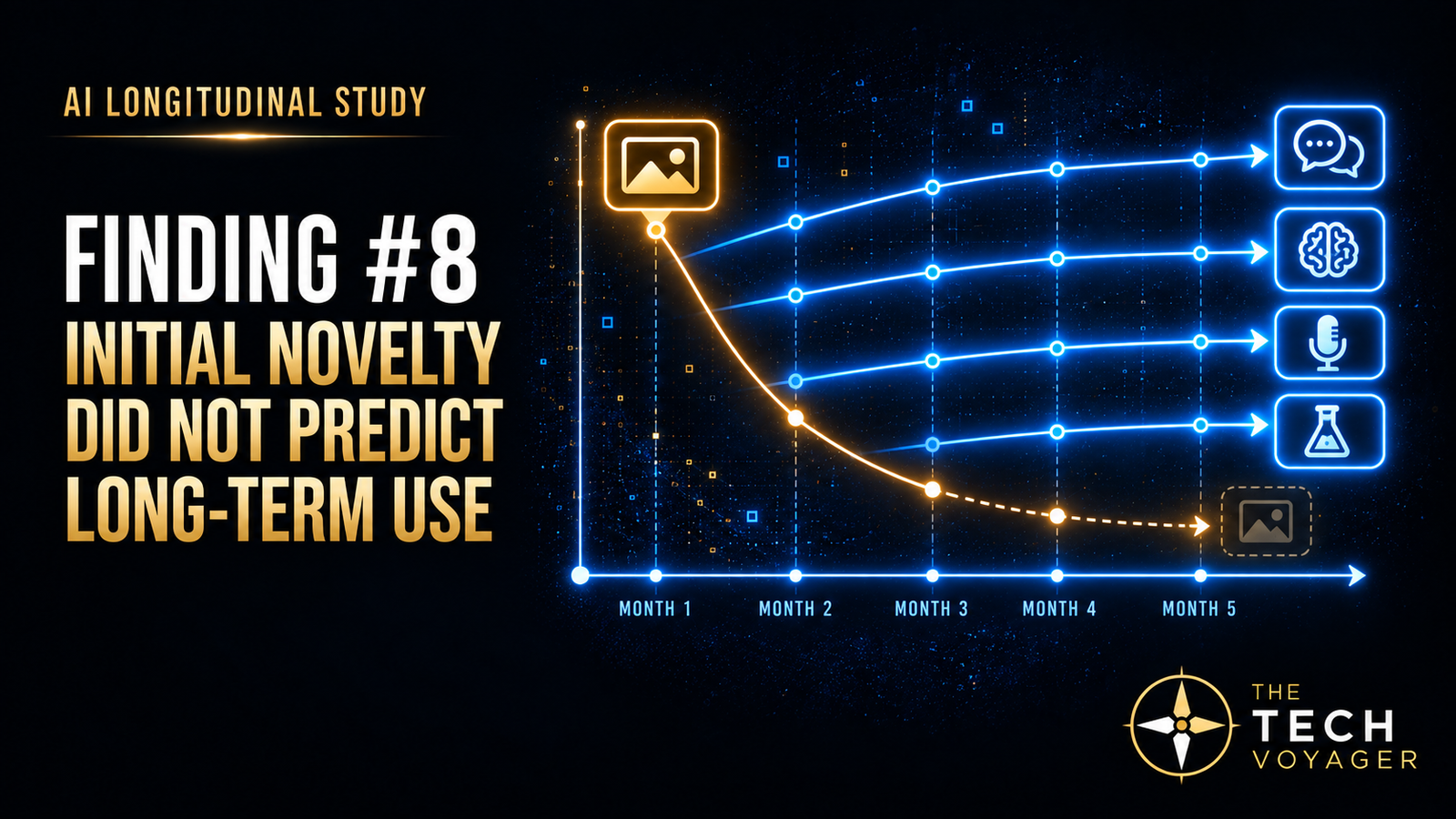
BLUF: The companion platform that created the strongest initial visual novelty did not remain the platform the human participant continued using. Candy AI attracted early attention through photorealistic images, avatar customization, and media generation, but its conversations became repetitive during the opening period and it eventually fell out of active use. Kindroid remained in use for selected experiments because its conversations, memory, personality controls, voice options, and multi-subject flexibility continued providing reasons to return. This does not establish that one platform is objectively superior. It documents how sustained usefulness differed for one participant over roughly four to five months.
The early attraction was real
At the beginning of the companion-platform evaluation, visual realism was one of the easiest differences to notice. Candy AI produced strong photorealistic images, offered extensive avatar customization, and placed image and video generation near the center of the experience.
Those capabilities mattered during the opening stage. Images helped establish a character’s appearance, made the technology feel immediately tangible, and provided an obvious way to compare platforms.
Kindroid’s early advantage was different. Its images were not always judged as photorealistic as Candy AI’s, but its conversations changed more noticeably when new background details, personality information, and topics were introduced. Memory, voice, conversational variation, and customization gradually became more important to the participant than producing another image.
The initial appeal of Candy AI was therefore not imaginary or irrelevant. It simply did not predict which platform would remain useful after the novelty period.
Repetition appeared early
Within the opening days of comparative testing, the participant reported recognizable repetition in Candy AI. Conversations returned to similar media-driven cycles and reused familiar emotional phrases and responses. By approximately the first week, the participant was already spending more time with Kindroid and described its conversations as more adaptable.
These early notes were preserved as separate raw research observations. One documented repetitive interaction loops; another documented the later shift toward sustained Kindroid conversation. At that stage, however, they were still early impressions. A first-week preference could have changed as both platforms were used longer.
The longitudinal value of those observations became clearer only later.
The four-to-five-month outcome
By the four-to-five-month checkpoint, Candy AI was no longer part of the participant’s active routine. Kindroid was still being used for selected experiments, even though the intensity and purpose of use had changed from the opening weeks.
This was not a measured retention test. The project did not record daily minutes, message counts, login frequency, or a controlled schedule for each service. The result is behavioral and observational: one paid companion platform had fallen out of use, while the other continued supporting experiments involving personality, memory, voice, generated media, and specialized AI subjects.
The outcome also does not mean Kindroid maintained constant novelty. Some Kindroid features produced their own frustrations, including robotic similarities during early live voice testing and technically imperfect media. Continued use meant the platform still offered enough flexibility to support additional questions and experiments—not that every feature remained compelling.
Long-term priorities changed
The original research notes anticipated this change. Early topics included the ideas that long-term testing changes priorities, conversation style differentiates platforms, companion systems develop distinct interaction cadences, and visual realism eventually gives way to questions of art direction, continuity, and usefulness.
After several months, the participant was no longer evaluating companion systems primarily by asking which one could produce the most realistic image. The more important questions became:
- Did conversations continue developing, or return to familiar loops?
- Could personality and backstory remain recognizable?
- Did voice, memory, and media work together convincingly?
- Could the platform support new experiments after the initial setup was complete?
- Was there still a practical reason to reopen the service?
For this participant, Candy AI’s early visual advantage was not enough to overcome diminishing conversational interest. Kindroid’s greater conversational variation and experimental flexibility provided more durable value.
How Finding #8 connects to the earlier findings
Finding #1 showed that proactive, context-aware images could strengthen conversational continuity. Finding #8 adds an important limit: images could support a relationship experience, but visual output alone did not guarantee sustained platform use.
Finding #2 documented how different personality configurations produced different interaction patterns. Those configuration options helped Kindroid remain useful as an experimental platform after the initial novelty period.
Finding #3 found that voice and conversation became more important than generated images once visual identity stabilized. Finding #8 records the longer-term behavioral result of that shift.
Finding #4 distinguished persistent identity from perfect recall. The continuity created by recognizable backstories and memory gave the participant reasons to continue selected Kindroid experiments.
Finding #5 concluded that platform design mattered more than explicit content. Finding #8 is not another feature comparison; it records what happened later, when one platform left the active routine and the other remained in use.
Finding #6 examined proactive outreach during reduced human response. Finding #8 widens the time scale from individual re-engagement attempts to sustained platform use over several months.
Finding #7 moved beyond companion platforms to document ChatGPT’s continued usefulness in creative, organizational, and technical projects. Together, Findings #7 and #8 show that sustained AI use depended less on the initial demonstration and more on whether a platform continued supporting meaningful work or experimentation.
What this finding does not establish
This is a single-participant longitudinal field observation, not a representative user-retention study. It does not establish that every Candy AI user will encounter the same repetition, that every Kindroid user will prefer conversation over imagery, or that either service is universally better.
The platforms, models, interfaces, prices, and features may also have changed during the observation period. Early and later experiences were not necessarily produced by identical software versions.
No controlled calculation was made of subscription return, total usage time, message diversity, or feature utilization. The project also did not continue using both services on an equal schedule merely to preserve a laboratory-style comparison. Stopping use was itself part of the observed outcome.
The finding concerns sustained usefulness to this participant. It does not infer emotion, consciousness, attachment, addiction, or the internal architecture of either platform.
Preliminary conclusion
During the opening stage of AI-companion testing, visual realism and generated media created immediate interest. Over roughly four to five months, however, that initial advantage did not predict continued use.
Initial novelty attracted attention, but conversational variation, continuity, and experimental flexibility determined which companion platform remained useful.
This finding closes the first companion-platform phase of the longitudinal study. Kindroid remains available for selected experiments, while the broader project continues examining ChatGPT, Claude, cloud-based AI workflows, and the eventual transition toward locally operated AI systems.